
Executive Summary: The Real Estate Lead Routing Gap
In the Dubai property market, agency leadership frequently diagnoses conversion drop-offs as portal-volume or portal-quality problems. When transactions slow down, agencies often purchase higher listing tiers, sponsor additional featured tags, or diversify into alternative acquisition channels. Yet technical audits of brokerage data pipelines reveal that high-intent inquiries from Property Finder, Bayut, and Dubizzle routinely break down after form submission. Manual inbox monitoring, unstandardized copy-pasting, absent deduplication, and fragmented WhatsApp outreach introduce operational friction and response latency. An event-driven architecture—connecting portal webhooks, automated normalization, configurable deduplication windows, multi-factor broker routing, and official WhatsApp engagement—creates an auditable, reliable bridge between portal demand and broker execution.
Every morning across Dubai, thousands of international and domestic investors browse residential and commercial listings across Downtown Dubai, Dubai Marina, Palm Jumeirah, and Dubai Hills Estate. When an investor identifies a compelling unit, they submit an inquiry through Property Finder, Bayut, or Dubizzle. What happens across the subsequent minutes determines whether that buyer conducts a structured consultation with your agency or engages with a competing brokerage.
The standard industry narrative suggests that portal leads are inherently disengaged or poorly qualified. In practice, buyer behavior in highly competitive international property hubs explains why response velocity and structured data handling matter: active buyers may submit inquiries across multiple competing listings within a single research session. If your brokerage relies on human administrators to manually scan an email inbox, copy unverified telephone numbers, and paste them into unmanaged WhatsApp chat groups, hours can elapse before contact occurs. By that time, the prospect is already interacting with another agency that delivered verified floor plans, payment schedules, and localized community guidance.
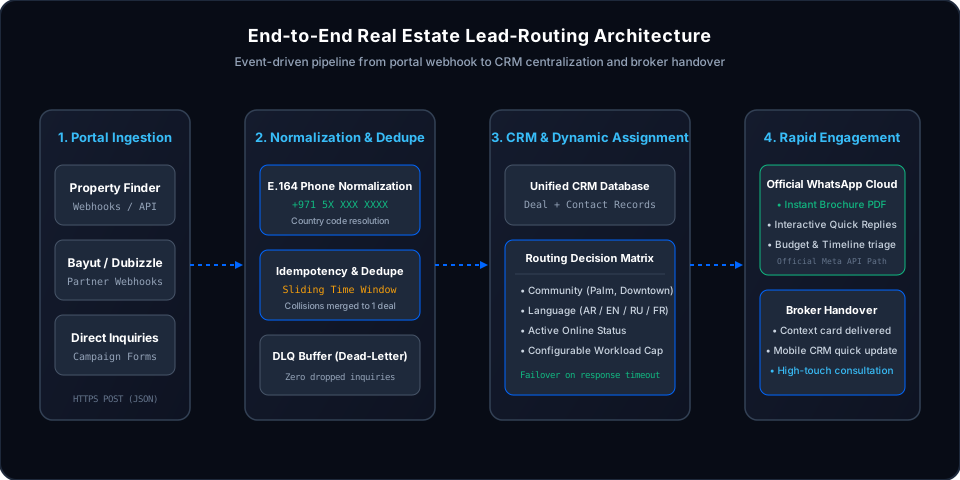
1. Failure Points in Traditional Dubai Agency Ingestion
Most UAE brokerages operate on an ad-hoc tech stack assembled organically as the firm expanded. While sufficient for low enquiry volumes, this approach introduces systematic failure points as listing portfolios scale:
- Inbox Silos & Manual Transposition: Portal notifications arrive in a generic administration mailbox (such as
info@agency.ae) or are held across disparate portal extranet dashboards. Administrative staff manually retype phone numbers and listing references, introducing human transcription errors. - Unchecked Lead Collisions: An active buyer inquiring about multiple off-plan villas across different developments within the same afternoon is often treated as separate, unrelated leads. Without automated deduplication, three different brokers from the same firm may contact the buyer independently, creating a disorganized brand impression.
- Malformed International Telephone Records: International investors frequently enter telephone numbers without international country dialing codes or with irregular spacing. Without automated E.164 normalization, automated dialers fail and WhatsApp outreach drops silently.
- Unmonitored Private Chat Handoffs: When leads are distributed by copying numbers into individual brokers' personal WhatsApp applications, management loses pipeline visibility. Response velocity, conversation progress, client objections, and lead status remain trapped on personal devices.
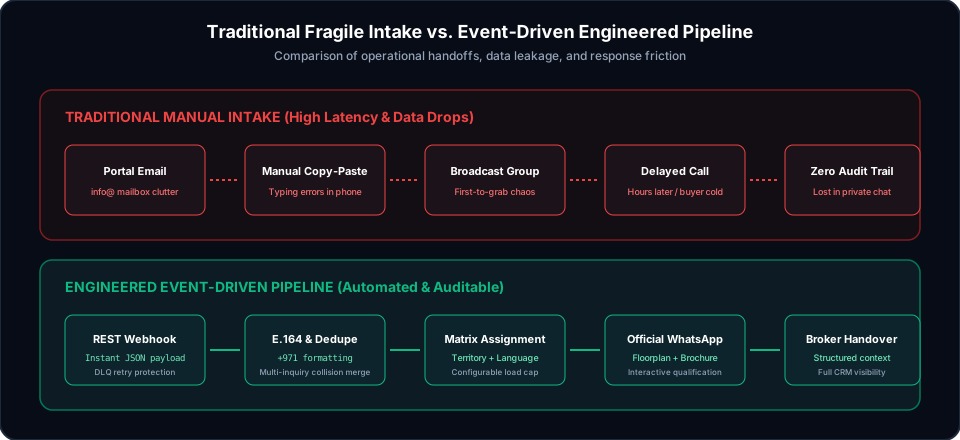
2. Inbound Webhook Payload Anatomy: Raw vs. Normalized
To establish programmatic control, incoming leads must be transformed from disparate portal formats into a clean, canonical data structure.
Below is an illustrative sanitized example of an inbound portal webhook payload representing an off-plan inquiry:
{
  "event_type": "new_inquiry",
  "portal": "PropertyFinder_UAE",
  "lead_timestamp": "2026-09-08T10:14:22Z",
  "inquiry_id": "pf_inq_9842104",
  "listing_reference": "PF-DHE-VIL-402",
  "property_title": "4-Bedroom Club Villas | Dubai Hills Estate",
  "property_category": "Villas",
  "developer": "Emaar Properties",
  "lead_contact": {
    "full_name": "Alexander Wright",
    "raw_phone": "050 123 4567",
    "email": "alex.wright@consulting-group.co.uk",
    "user_country": "AE"
  },
  "utm_parameters": {
    "source": "propertyfinder",
    "medium": "featured_tier",
    "campaign": "dubai_hills_q3"
  }
}
Before this raw payload touches the CRM database or triggers broker notifications, an ingestion microservice cleanses, validates, and enriches the data into a normalized internal schema:
{
  "idempotency_key": "d41d8cd98f00b204e9800998ecf8427e_971501234567_DHE-VIL",
  "canonical_contact": {
    "first_name": "Alexander",
    "last_name": "Wright",
    "phone_e164": "+971501234567",
    "phone_country_iso": "AE",
    "email_normalized": "alex.wright@consulting-group.co.uk"
  },
  "property_context": {
    "project": "Dubai Hills Estate",
    "sub_community": "Club Villas",
    "property_type": "Villa",
    "developer_canonical": "Emaar",
    "price_range_aed": "7500000-8500000",
    "listing_id_internal": "LST-8821"
  },
  "attribution": {
    "primary_channel": "Portal",
    "source_portal": "Property Finder",
    "listing_tier": "Featured",
    "campaign_tag": "dubai_hills_q3"
  },
  "pipeline_routing": {
    "required_territory": "Dubai Hills Estate",
    "language_priority": ["English"],
    "assigned_tier": "Luxury Secondary",
    "timestamp_utc": "2026-09-08T10:14:23.140Z"
  }
}
3. Portal Ingestion Methods Compared
Dubai agencies operate with diverse integration partners. The table below provides a qualitative operational comparison of common ingestion mechanisms:
| Ingestion Mechanism | Operational Latency | Payload Fidelity | Maintenance & Resilience Profile |
|---|---|---|---|
| Direct REST Webhook | Lowest operational delay (event-driven) | High (Structured JSON with UTM & agent IDs) | Requires secure endpoint, SSL certificate, and dead-letter queue (DLQ) retry buffer. |
| Multipart Transactional Email Parser | Provider-dependent polling delay | Medium (Susceptible to template layout changes) | Useful fallback when portal API access is tier-restricted; regex parsers require version monitoring. |
| Scheduled Batch CSV Export | Batch-oriented latency (multi-hour delay) | High for historical reporting; poor for live sales | Unsuitable for live buyer engagement; primary value is retrospective audit and attribution matching. |
4. Normalization & Deduplication Logic
Deduplication is essential to prevent broker collisions and maintain a coherent buyer journey. When multiple inquiries arrive from the same phone number or email within a configured deduplication window (such as an agency-configured 24-hour or 48-hour active window), the pipeline applies deterministic resolution rules.
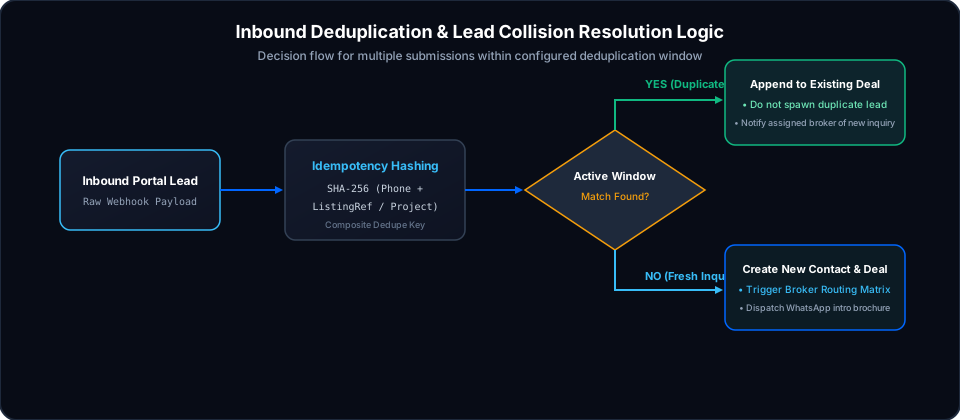
The deduplication engine evaluates two distinct scenarios:
- Scenario 1: Repeat Inquiry on Same Development / Listing: If a buyer submits an inquiry on Listing A, and 2 hours later submits an inquiry on Listing B within the same community, the system associates the new listing with the existing active deal. The assigned broker receives an automated notification: "Buyer expressed additional interest in Club Villas Unit B." No duplicate contact record or secondary broker assignment is created.
- Scenario 2: Unrelated Community Inquiries: If a buyer inquires on a luxury villa on Palm Jumeirah and simultaneously an off-plan apartment in Business Bay, the agency's business rules determine whether the record remains with a single relationship manager or routes as a coordinated multi-team consultation.
5. The Multi-Factor Broker Routing Engine
Rather than distributing inquiries via unmanaged broadcast groups or simple round-robin lists, high-performing brokerages deploy dynamic routing rules based on four operational dimensions:
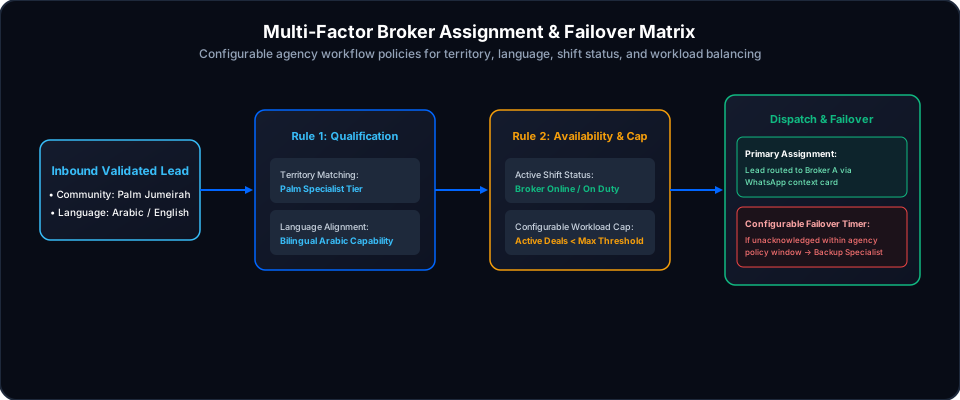
- Territory & Project Specialization: Inquiries for prime communities (Palm Jumeirah, Emirates Hills, Downtown Dubai) route exclusively to brokers verified for those specific project master plans and fee structures.
- Language Alignment: Inbound source signals (such as portal locale or inquiry notes in Russian, Arabic, French, or English) prioritize brokers fluent in the buyer's preferred tongue.
- Active Shift & Online Status: The engine queries broker calendar and shift status. Inquiries arriving outside a broker's active duty hours route to on-duty specialists to prevent response stagnation.
- Configurable Workload Caps: Agency leadership configures maximum active deal limits per broker. When an agent reaches their active threshold, incoming leads temporarily balance toward available team members to maintain high responsiveness.
When an inquiry is assigned to a primary broker, an internal monitoring timer begins. If the broker does not acknowledge the inquiry or log initial contact within an agency-configured policy window (e.g., 15 minutes during business hours), the routing engine automatically reassigns the lead to a secondary backup broker, logging the event in the audit trail.
6. Programmatic WhatsApp Engagement & Automated Context Handoff
Using the official Meta WhatsApp Cloud API via an official platform integration path, the system simultaneously initiates customer engagement and arms the assigned broker:
- Automated Document Delivery: The buyer immediately receives a verified, branded WhatsApp message containing the exact brochure, floor plan, and developer payment milestones corresponding to their listing reference.
- Interactive Qualification: Through intuitive quick-reply options, the prospect confirms their investment timeline (immediate, 1–3 months, exploratory) and financing preference (cash vs. UAE mortgage). These inputs write back to the CRM deal record in real time.
- Automated Context Handoff: When the buyer replies or requests a consultation, automated messaging pauses. The assigned broker receives a structured context card on their mobile device detailing verified property interest, budget tier, and qualification answers. The broker enters the conversation equipped for a high-touch human consultation.
7. Production Resilience: Dead-Letter Queues & Spike Handling
Brokerage ingestion pipelines must be engineered defensively to withstand real-world operational disruptions:
- Dead-Letter Queues (DLQ) & Retry Backoff: If the agency's primary CRM experiences temporary rate limiting or maintenance downtime, incoming portal webhooks are buffered in a durable message queue (such as Redis Streams or Amazon SQS) and retried with exponential backoff. Inquiries are never lost due to downstream API pauses.
- Handling Inquiry Spikes: Major off-plan developer launches (such as newly announced waterfront towers) can generate sudden spikes in webhook volume. An asynchronous architecture decouples payload ingestion from database writes, ensuring zero dropped leads during high-traffic release windows.
- Mobile CRM Usability: Real estate brokers spend their working days on property viewings and client meetings. Forcing brokers to navigate complex desktop CRM forms on mobile browsers leads to abandoned updates and incomplete records. Mobile usability requires conversational WhatsApp action buttons or streamlined mobile web forms allowing brokers to update deal stages with single-tap selections.
8. Data Governance & UAE Data-Protection Considerations
Data-handling workflows should be designed to support the organization's governance requirements under UAE Federal Decree-Law No. 45 of 2021 regarding Personal Data Protection (PDPL), subject to the firm's internal legal, consent, and retention policies:
- Consent & Provenance Logging: Inbound records store the originating portal timestamp and privacy terms acceptance to verify lawful processing.
- Encrypted Transport & Storage: Inbound payloads must be encrypted in transit via TLS 1.3 and stored using AES-256 encryption within regional cloud facilities (such as UAE-based cloud data center regions).
- Role-Based Access Control: Brokers access only their assigned client records, preventing unauthorized mass data exports.
9. 10-Point Technical Readiness Checklist for Brokerage Leadership
Portal Extranet Audit: Confirm developer API or webhook access availability across Property Finder, Bayut, and Dubizzle accounts.
Fallback Email Parsing: Deploy structured MIME parsers for portal feeds where direct webhook access is unavailable.
Telephone Normalization Service: Configure automated E.164 formatting ensuring international country codes resolve cleanly to +971 standards.
Deduplication Policy Definition: Establish organizational sliding time windows for merging multi-listing buyer collisions.
Broker Specialization Mapping: Document community master-plan assignments and multilingual capabilities in the CRM user directory.
Configurable Workload Limits: Define maximum active lead thresholds per agent tier to maintain responsiveness.
Meta WhatsApp Cloud Setup: Secure verified WhatsApp Business Solution Provider (BSP) or direct Cloud API credentials.
Dead-Letter Queue Buffering: Configure durable message queues (SQS/Redis) to buffer webhook payloads during CRM maintenance.
Audit Trail Logging: Implement immutable event logging for lead ingestion, assignment timestamps, and broker response times.
Mobile Usability Verification: Test broker mobile update workflows on iOS and Android devices under field conditions.
10. Frequently Asked Questions
Can this architecture integrate with Property Finder, Bayut, and Dubizzle simultaneously?
Yes. The ingestion layer utilizes modular adapters for each portal. Where native developer APIs or webhooks are supported by the portal's integration tier, direct JSON webhooks are configured. For accounts without webhook access, transactional email parsers extract standardized payloads into the unified message queue.
Does automated WhatsApp outreach risk number bans from Meta?
No, provided the integration utilizes the official Meta WhatsApp Cloud API or an authorized Business Solution Provider (BSP). Unofficial scraping tools and unauthorized browser automation violate Meta terms of service and risk bans. Official Cloud API deployments use pre-approved utility message templates triggered directly by user-initiated inquiries.
What CRM platforms support this event-driven workflow?
The architecture is CRM-agnostic. It connects via REST APIs or webhooks to major real estate CRM platforms including HubSpot, Salesforce, Zoho CRM, Bitrix24, and specialized property platforms. The key requirement is an open API that allows programmatic record creation and custom field mapping.
11. Technical References & Official Documentation
- • Meta for Developers: WhatsApp Cloud API Documentation & Message Templates
- • UAE Legislation Portal: Federal Decree-Law No. 45 of 2021 on Personal Data Protection (PDPL)
- • IETF: RFC 3966: The tel URI for Telephone Numbers (E.164 Standards)
- • Property Finder: Developer Integration Feeds & Broker Portal Extranet Specifications
Architect Your Agency's Lead Routing Infrastructure
Generating portal inquiries is only half of the acquisition equation. Long-term commercial leadership belongs to brokerages that replace manual copy-pasting with resilient, event-driven data pipelines.
To audit your current lead routing stack or deploy an enterprise integration, explore Asif Digital's tailored real estate CRM architecture in Dubai.